

What EcoFeatures Delivers
Measured in a living-lab pilot at HKUST Tower 4 — a 12-storey, three-flats-per-floor building with the same plumbing topology as thousands of Hong Kong towers
98.8%
Leak Detection Accuracy
Measured on the real Tower 4 network using combined pressure and flow sensing. Accuracy ranges from 86% to 99% across sensor configurations and transient types.
0.01 L/s
Micro-Leak Sensitivity
A weeping joint far below the threshold of any manual survey — caught while it is still a maintenance item rather than an emergency.
Floor + Flat
Pinpoint Localisation
A single inference pass returns which floor, which flat, and whether the leak sits inside the unit or in the communal pipework outside it.
Zero
Flats Entered
Every sensor sits in the pipe duct or meter room, outside the residential unit. No access negotiation, no refused entry, no disruption to residents.
24/7
Continuous Monitoring
Not a one-off inspection visit. The network is watched constantly, so intermittent leaks that hide between periodic surveys are caught.
No Drawings
Blueprint-Agnostic
A hydraulic simulator synthesises the network from coarse building parameters, so missing or obsolete plumbing drawings stop being a blocker.
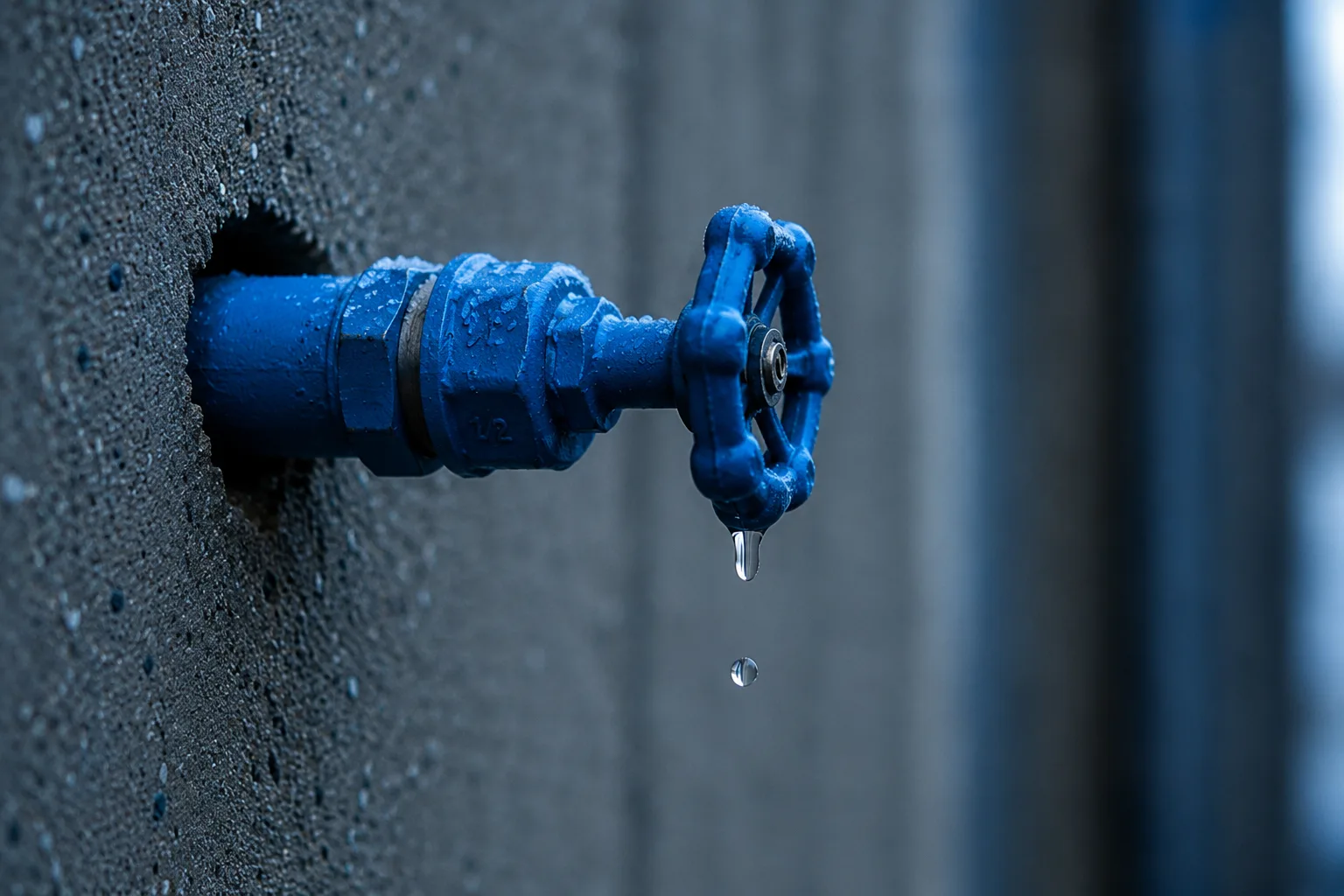
Ageing High-Rise Pipes Are Failing Silently Behind the Walls
Hong Kong records more than 36,000 water seepage complaints a year, and investigating them costs the Government roughly HK$300 million annually. More than 35% of those cases close without the source ever being found. Water loss inside communal building pipes has risen five-fold since 2010, and over 50% of Hong Kong's buildings are already more than 30 years old.
The structural problem is that damage never appears where the leak actually is. A weeping joint on the 22nd floor migrates down slabs and along conduits and surfaces as a stain two floors below. By the time anyone can see it, the repair is already an emergency — and every existing method for finding it, from dye tests to moisture meters to microwave surveys, needs a technician inside somebody's flat.
EcoFeatures monitors the pipe itself, from the communal duct. Our physics-guided deep learning platform reads the hydraulic transients residents generate every time they open a tap, and converts an invisible liability into a monitored, manageable asset.
Our Mission
Make concealed pipe networks visible
Turn the one part of a building nobody can inspect into a continuously graded, continuously reported asset class.
End the reactive repair cycle
Catch defects while they are still small, so buildings stop waiting for failure and paying a premium to fix it under emergency conditions.
Protect residents and property value
Prevent spalling, mould and ceiling collapse, and give managers a budgetable maintenance line in place of unpredictable emergency spend.
How EcoFeatures Works
Blueprint-agnostic edge AI, built on transient analysis. Three steps from a duct-mounted sensor to a floor-and-flat answer.
1. Sense
Dual-mode edge nodes sit in the pipe duct and meter room — clamp-on triaxial accelerometers, or in-line pressure sensors where the building allows it. They capture the hydraulic transients residents create every time a tap opens, at 1 kHz. Nothing is emitted into the pipe; the system listens to the signal the building already generates.
2. Model
A Method-of-Characteristics 1D transient flow model builds a high-fidelity digital twin of the network from coarse building parameters alone, generating over 220,000 synthetic training scenarios. This is what makes the system blueprint-agnostic — missing or obsolete plumbing drawings stop being a deployment blocker.
3. Localise
A hierarchical multi-task 1D-CNN, fine-tuned on site by transfer learning, answers four questions in a single inference pass within seconds: is there a leak, which floor, which flat, and is it inside the unit or in the communal pipework outside.
US provisional patent filed 1 December 2025 — IP.PA.12794, US application 63/938125 (Louati, Choura, Cheng & Li), covering the multi-stage AI approach to hierarchical leak localisation.
Who We Serve
Owners and managers of ageing high-rise buildings whose concealed pipe networks are approaching or past their service life.
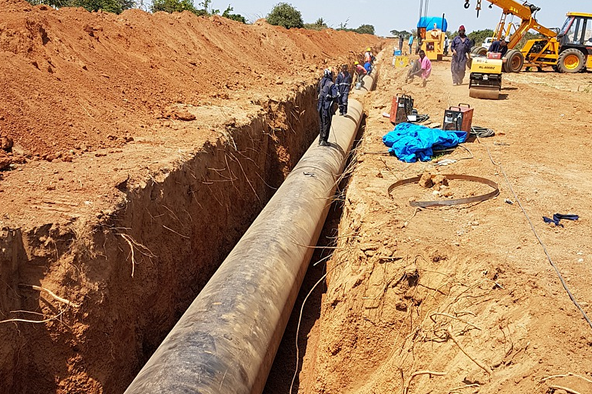
High-Rise Residential
Estates 30 years and older, where seepage complaints, tenant disputes and refused access make conventional investigation slow and expensive.
Property Management
Managers running multi-building portfolios who need a predictable maintenance line item instead of irregular emergency callouts.
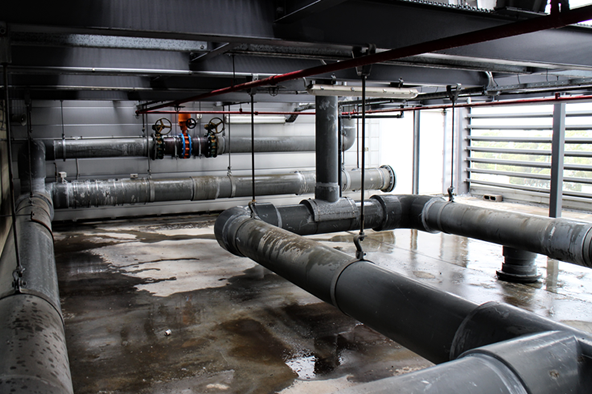
Premium & Landmark Assets
Signature buildings where leak damage carries disproportionate financial and reputational cost, and disruption to occupants is unacceptable.
Public Housing & Owners' Corporations
Bodies making capital expenditure decisions on communal pipe systems, often against subsidy schemes and rehabilitation programmes.
Service Packages
A one-time survey that lowers the barrier to a first building, and a subscription that converts irregular emergency spend into a predictable monthly line.
Get in touch for pricing scoped to your building or portfolio.
Single-Time Surveying
One-time, within a month
- Site survey and sensor plan for the riser and meter rooms
- Plug-and-go clamp-on installation — no downtime, no plumbing modification
- Synthetic hydraulic model built from coarse building parameters
- On-site fine-tuning via transfer learning
- System baseline and network condition report
- Edge-AI hardware nodes (included)
Continuous Monitoring
Subscription, minimum 12 months
- Everything in Single-Time Surveying (included)
- 24/7 cloud monitoring of the whole pipe network
- Real-time micro-leak alerts with Floor / Flat / Unit location
- Severity grading and predictive asset-lifecycle analytics
- Manager dashboard and quarterly performance reporting
- Priced per building or per unit — a budgetable fixed line item
Additional streams: premium predictive-lifecycle analytics tiers · API integration with existing building management systems · white-label partnerships with property-management platforms and insurers.